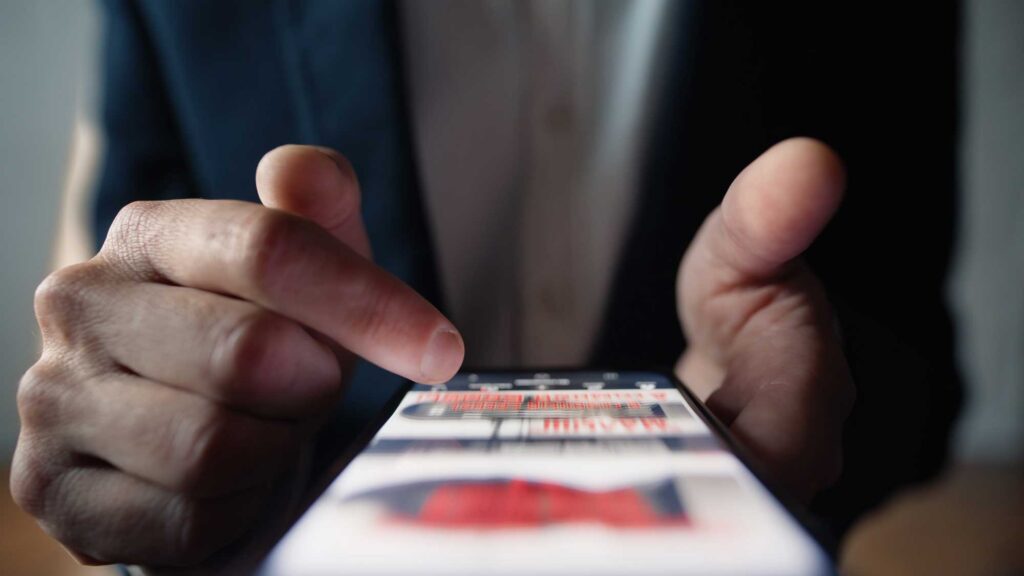
You pick up your phone to check one message, and suddenly an hour has passed. Your thumb keeps scrolling, your mind is buzzing, and a quiet voice says, “Why can’t I just put it down?” If that sounds familiar, you are not alone. Many people feel “addicted” to their phones or social media, especially in a world where staying connected often feels like a full-time job. But what does the research actually say about how phones affect our mental health?
The Scroll That Never Ends
Social media is designed to keep us engaged. The endless scroll, likes, and notifications create a powerful feedback loop in the brain that makes it difficult to stop. Over time, what begins as an enjoyable habit can become automatic. Researchers call this social media addiction—a pattern in which checking your phone feels less like a choice and more like a reflex.
A review by Kircaburun and Griffiths (2022) found that people who reported feeling addicted to social media were more likely to experience anxiety, loneliness, and emotional exhaustion. Similarly, research from Columbia University (2024) found that the problem is not the number of hours spent online but the compulsion to check and scroll. In other words, the quality of engagement matters more than the quantity.

How Late-Night Phone Use Affects Sleep Quality
Maybe you have noticed this: you are tired, you want to unwind, but before you know it, it’s past midnight, and you are still on your phone. Late-night scrolling does more than cut into sleep time. Blue light interferes with melatonin, the hormone that helps you fall asleep, and the mental stimulation keeps your brain alert long after you’ve put the phone down. Research shows that people who use their phones late at night report poorer sleep quality and higher stress (Li et al., 2023). Heavy phone use is also linked to neck pain, eye strain, and headaches (Gao et al., 2021).
If you notice your phone use increases when you are feeling anxious or restless, you are not alone. Learning to calm your body and regulate anxiety can make it easier to set healthy digital boundaries. You can explore practical ways to do that in our article, How to Calm Down Anxiety.
Social Media and Low Self-Esteem: The Comparison Trap
You log on just to check in, but within minutes you’re scrolling through the highlight reels of other people’s lives—the perfect vacation, the promotion, the happy couple. Even if you know it’s curated, a part of you starts to feel like you’re falling behind. Research shows that constant comparison online can lead to sadness, insecurity, and lower self-esteem (Zhou, 2024). When self-worth becomes tied to likes and followers, confidence tends to fade. If social media leaves you feeling worse instead of better, it may be time to take a pause—not as punishment, but as self-protection.
The Link Between Phone Use and Emotional Disconnection
Our phones have become multi-purpose tools: we use them for work, messages, podcasts, and even therapy appointments. But constant multitasking can come at a cost. Heavy phone use is linked to shorter attention spans, greater emotional fatigue, and weaker cognitive control (Beyens et al., 2020). Ironically, the more time we spend “connected,” the more disconnected we can feel from real life. Many people report feeling surrounded by others online yet lonely in person. That loneliness is real, and it is one of the most common emotional side effects of digital overload.
Tips to Deal With Phone Addiction
You do not have to delete every app or quit social media entirely. The goal is not avoidance but intentional use. Try designating phone-free spaces, such as mealtimes or the first hour after waking. Turn off nonessential notifications and notice how much calmer your mind feels. Curate your feed for peace rather than pressure by unfollowing accounts that trigger comparison. Reconnect offline through conversation, movement, or time in nature. If you’ve tried to change your habits on your own and it hasn’t worked, therapy can help you understand the emotional pull behind compulsive phone use and guide you toward a healthier balance.
The Takeaway
Feeling addicted to your phone does not mean you are weak. It means you are human, responding to technology built to hold your attention. The good news is that awareness is the first step back to control. When you start using social media more mindfully, your focus, confidence, and calm begin to return—one small boundary at a time. You deserve to feel present in your life, not lost in the scroll.
At Avedian Counseling Center, we offer face-to-face counseling in Woodland Hills, Sherman Oaks, Glendale, Pasadena, and Larchmont. We provide therapy in the Los Angeles area to individuals, couples, and families. If you, your loved one, or your teen is struggling with phone addiction and scrolling through social media, call Avedian Counseling Center today to get proper help.
Authored by Sasha Kleinman

Silva Depanian is a Licensed Marriage and Family Therapist (MFC#121864) and Certified Anger Management Counselor at Avedian Counseling Center, offering services via telehealth and in Glendale. She specializes in chronic pain management, anxiety, anger management, and codependent relationships, working with individuals and groups who are seeking a more fulfilling quality of life. Silva’s mission is to help clients achieve their goals using Cognitive Behavioral Therapy and Mindfulness techniques, through encouraging change, boundary setting, and healthy communication. Whether in individual sessions or group settings, Silva is here to listen, and works in tandem with clients on their journey towards balance and happiness.