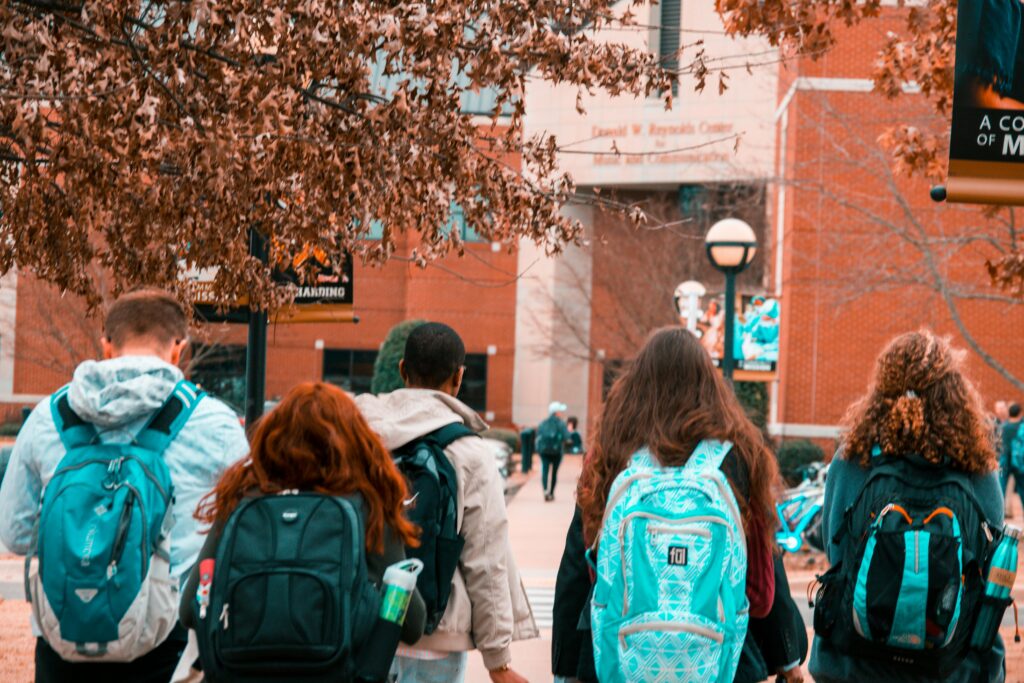
College is often an exciting but also daunting time for young adults. Moving away for the first time and gaining independence is a huge step in one’s formative years and can truly shape who we become later in life. Many college students may not yet have the tools or coping mechanisms to deal with this rapid change, especially if they have never left home before. This sudden transition can lead to adjustment difficulties.
Why Is My Teen Having Difficulty Adjusting to College?
There is often a curve, known as the “W-Curve Theory,” that illustrates the phases students go through as they first integrate into college (Bishop, 2023). The first stage is the honeymoon phase, marked by excitement, interest, and a lot of newfound energy as you embark on this much-anticipated independence (Bishop, 2023). College is often depicted in the media as a fun and amazing time where people party, meet new friends, and join fraternities, making it seem like one of the most exciting periods of our lives. While that may be true for many, college can also be a completely different experience. Some students may choose not to participate in the party lifestyle, finding college more strenuous and stressful due to a heavier workload. This leads to the second stage: if that media narrative does not match our reality, we begin to realize that college may not be exactly what we thought. This second stage is called reality or culture shock (Bishop, 2023). At this point, homesickness can increase, and academic work can become more strenuous as students try to keep up with their own schedules. (Bishop, 2022) College gives people a lot of free time, but it also requires them to manage that time responsibly. Whether studying or socializing, students must learn to dictate their own schedules. This is where college can become a real challenge. Once students acclimate, their experience on the curve will diverge some move toward acceptance, while others may struggle with feelings of mental isolation as they continue on the next part of the curve (Bishop, 2023).
This is the stage where students may feel disconnected. They are trying to form their own identities and beliefs with the education they’re receiving, which may clash with what they grew up with at home. High school friends may no longer be the people they choose to spend time with, and parents may have conflicting beliefs as their children form their own opinions. Overall, this is a period of tremendous personal growth, where students learn more about themselves, discover what they believe in, and figure out what they want to study. Sometimes, this leads students to switch majors or feel very different from how they did in high school. Often, this phase can feel lonely, but as students learn more about themselves, they begin to understand what they truly want in life (Bishop, 2023).
How Can I Help My Teen Adjust To College?
It is important that students feel supported by their families, peers, and schools in order to maintain good mental health. This is a very stressful time, and it is normal to experience these emotions and feelings while adjusting to college. Fortunately, most colleges offer free resources and mental health staff on campus, which students can access if they are feeling depressed, stressed, or anxious.
This leads us to the last point on the curve: acceptance. This stage may look like being more involved on campus, feeling excited or happy, joining clubs or honor societies, and generally feeling more settled and less confused (Bishop, 2023).
How Can We Prepare Kids for College?
For parents, the best thing to do is talk to them about your own experience. If you went to college, let them know that it’s normal to feel homesick or like they don’t belong at first. Sharing your own experiences and lessons from living independently can provide valuable guidance as they start their own journey away from home. The best way to prepare kids for college is to encourage them to take full advantage of everything available on campus, such as academic support, clubs, free amenities, the gym, and various activities. These opportunities help them meet new people, have fun, and enjoy their time in college.
As parents, seeing your kids go off to college for the first time can also bring up a lot of anxiety and emotion. While this may be an exciting or difficult time for your children, it is also a transition period for you as parents. Allow yourself to adjust to this change in lifestyle and the emotions that arise. Your own adjustment is just as important.

Nicholas Schaub is an Associate Marriage and Family Therapist dedicated to supporting clients on their path toward healing and growth. He holds an undergraduate degree in Psychology with a minor in Entrepreneurship, as well as a master’s degree in clinical psychology with an emphasis in Marriage and Family Therapy, both from California Lutheran University. Having lived in Thailand, the Philippines, the United Kingdom, and the United States as a third-culture kid, Nicholas brings a deep appreciation for cultural diversity and adaptability to his practice. His global upbringing fosters a culturally sensitive and open approach, enabling strong connections with clients from diverse backgrounds. Aiming to break the stigma around men seeking therapy, Nicholas is committed to offering a safe, inclusive environment where clients of all genders and backgrounds can share openly and feel genuinely supported.