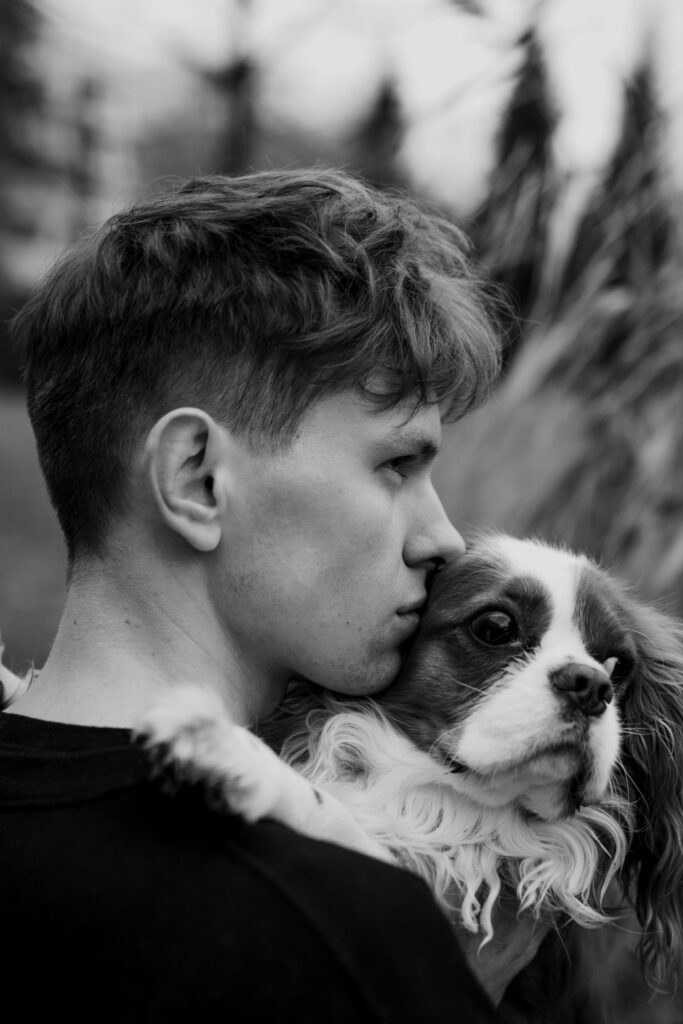
Three years ago I had a dog named Herman.
He was a rescue from the pound. He lived in a nice family home with two loving humans who doted on him. He was the type of dog that would stay by your side even if you were not paying attention to him. He just wanted to be close to you, in the same room as you. Herman was very much part of my life and I loved him with all my heart. Unfortunately, he had started developing symptoms of Cushing’s disease at the end of COVID. That is when I noticed his thinning fur, pot belly and unquenchable thirst. Later on toward the end of his life, he needed insulin for diabetes. He went from being a happy, playful, and healthy dog to one that was very sick and needed medicine every day that was not working. His physical appearance changed drastically through the span of two years. Talking about it, remembering how he was at the end, gets me emotional. Grief doesn’t just live in the moment we lose them — it lives in the memories of watching them decline. He eventually had to be put down because he was going into diabetic shock, and the medicine for diabetes would render the Cushing’s disease medication ineffective. It was a complete catch-22.
That experience fundamentally changed how I understand pet loss.
After Herman, I began to notice something I hadn’t seen clearly before. So many people carry pet loss quietly. They grieve deeply, but do it alone — unsure if their pain is “too much,” worried they’ll be told “it was just a dog” or encouraged to move on before they’re ready. There often isn’t permission, socially or culturally, to mourn an animal the way we mourn a human, even though the bond can be just as profound. Pet loss grief is often invisible. There’s no bereavement leave. No casseroles dropped off. No ritual that tells you your pain makes sense. You’re expected to keep functioning while your world has quietly changed. What makes this grief especially heavy is that our pets are woven into the most ordinary parts of our lives. They’re there in the mornings, in the evenings, in the pauses between everything else. When they’re gone, the absence shows up in a thousand small ways — the silence, the routines, the habits your body hasn’t caught up to yet.
I also realized how isolating it can be to make end-of-life decisions for a pet. You’re asked to hold medical information, ethical responsibility, and deep emotional attachment all at once. Even when you know you did the most compassionate thing, the guilt of grief can linger. The what ifs can be relentless. After losing Herman, I understood that pet loss isn’t something people “get over.” It’s something they learn to carry — often without support, language, or understanding from others.
That insight continues to shape how I approach pet loss grief.
At Avedian Counseling Center, we realize that many individuals grieve because of losing their fur babies. As such, we created a support group for pet loss so that folks can have the space to share about their experience, and not need to feel alone. If you are grieving the loss of a pet and need a supportive space, our weekly pet loss support group can help. Contact us today for more information.

Sasha Kleinman is a dedicated Registered Associate Marriage and Family Therapist who works with individuals, couples, and families seeking support through trauma, grief, relationship challenges, anxiety, and feeling out of alignment with the world around them. Her approachable style helps clients feel at ease as they explore their emotional experiences and move toward healing. Sasha practices under the supervision of Silva Depanian, LMFT (MFC#121864). Sasha offers therapy sessions in person at the Sherman Oaks and Woodland Hills offices, as well as via telehealth throughout California.