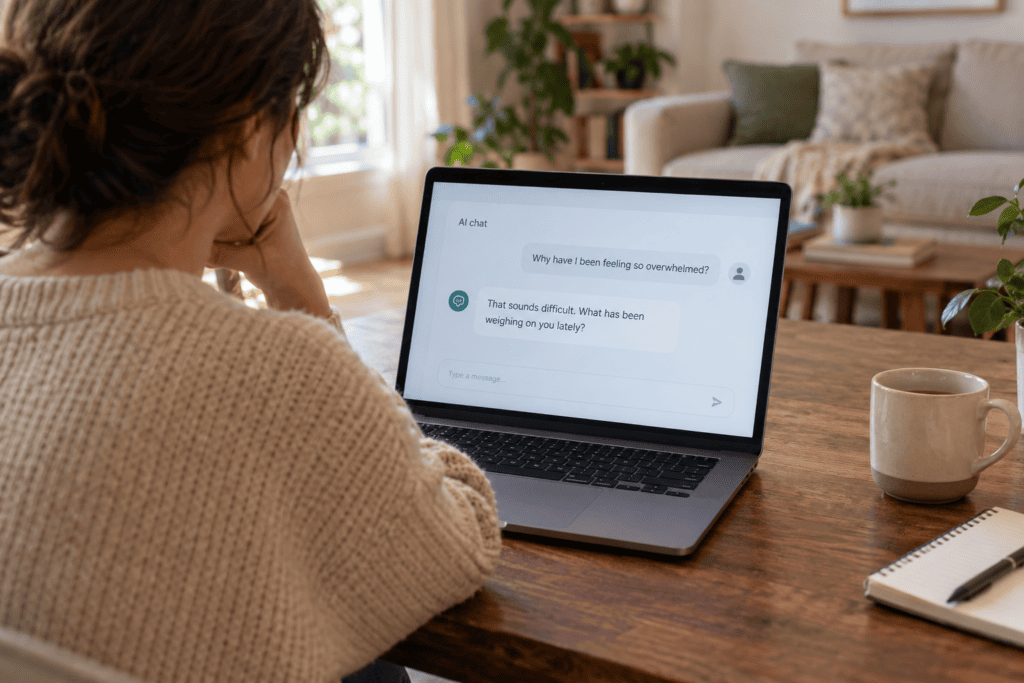
A few days ago, I asked an Artificial Intelligence (AI) chatbot to help me figure out the best way to respond to someone who had upset me without reacting emotionally. Not only did it provide me with options of how to phrase an appropriate response, but it also tried to understand why I may have been upset in the first place, while also removing any biased point of view from the situation – you know, kind of like a therapist. Except it’s not a therapist; it’s a robot. So, is that why some people resort to AI’s quick answers rather than seeking actual therapy? I ask that because I usually end my own therapy sessions telling my therapist, “Wow, this is why people don’t go to therapy, huh? It’s hard work.” AI can remove some of the hard work and accountability needed to progress through one’s therapeutic journey by providing answers we want to hear but may not necessarily need to hear, given its own limitations as an AI service.
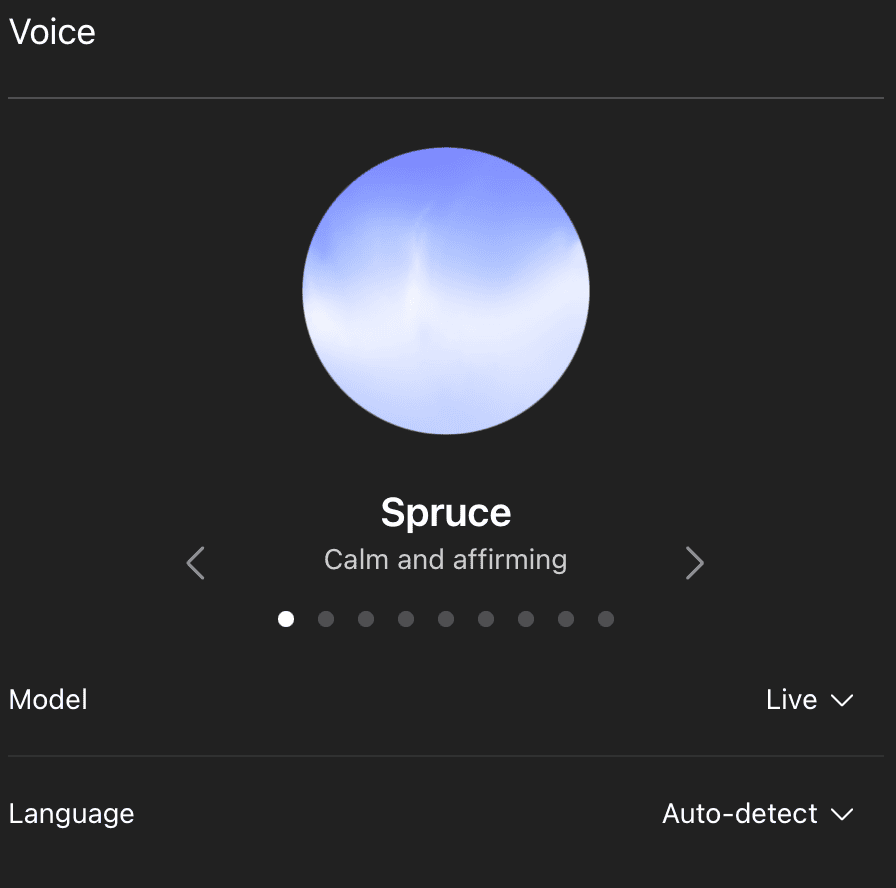
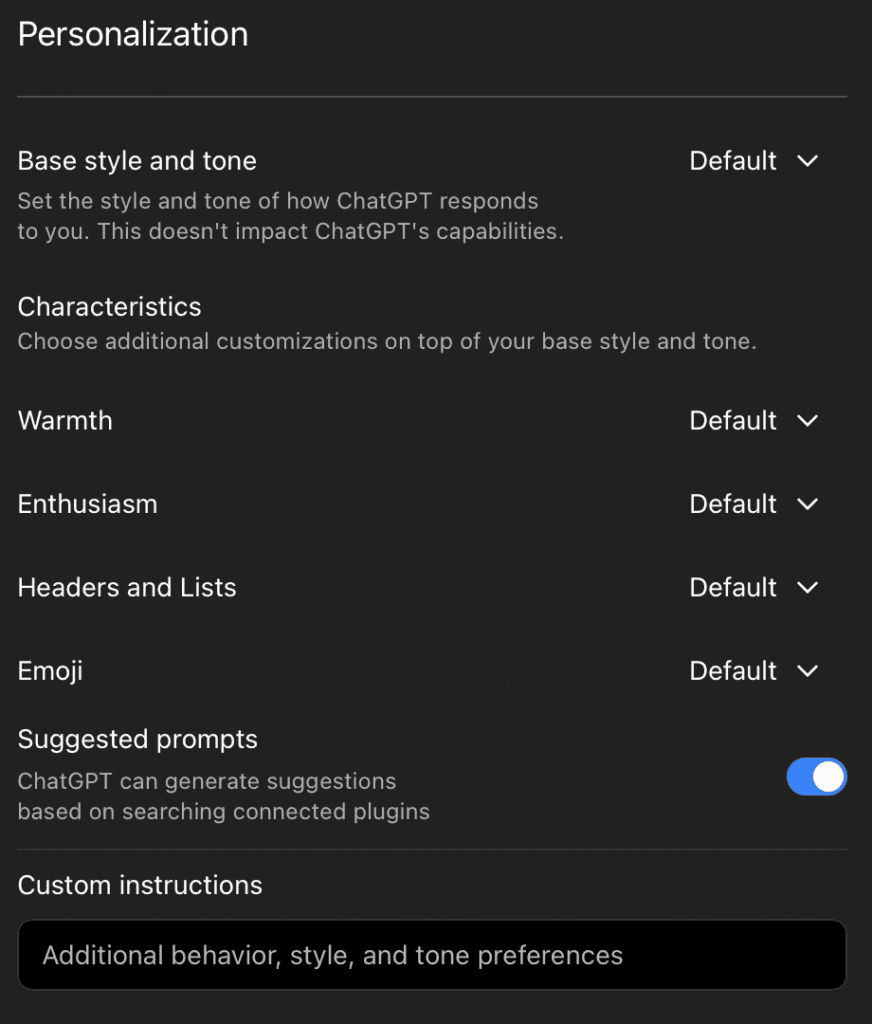
According to a recent study, only about one-third of Americans think they use AI, but over 70% unwittingly use it through devices that incorporate AI (Prestianni, 2026). This study also suggested that most companies are incorporating AI use into their workflow. That said, AI seems as prevalent in most people’s lives as social media. Yet, each form of AI brings a different resource to the table. Generative AI, such as ChatGPT, mimics human-like interactions instead of just being useful only for coding and technical tasks (IBM Data and AI Team, 2023). ChatGPT allows for adjustment of settings from different voices to different approaches in communication, in terms of warmth and style.
In a conversation with my colleague, Avedian Counseling Center’s veteran therapist Silva Depanian (LMFT # 121864), she noticed the topic of AI use for therapy emerging and found it interesting to explore through a client’s lens. Although I am not a therapist, I am a client, and the idea piqued my interest as well. Hence, this blog.
Yet, regardless of AI’s quick response and ease of access, it just is not comparable to legitimate therapy performed by a human; at least not yet, as Super AI (capable of surpassing human capabilities and cognition) is purely theoretical (IBM Data and AI Team, 2023). Can AI replace a therapist? AI today can generate language that sounds remarkably natural, thoughtful, and even emotionally attuned. However, producing convincing language is not necessarily the same as understanding the person behind the conversation. This includes being unable to keep up with the narrative of one’s life or give one concrete answer to a question, as AI can provide different answers to the same question each time. Researchers thus caution against assuming that linguistic fluency demonstrates equivalent abilities in reasoning, contextual understanding, social cognition, or knowledge (Mahowald et al., 2024).
Therefore, there is no validation and affirmation solid enough to be received from AI technology that actually has no understanding of what you are feeling or saying. So, although AI can be an easy and accessible way to help put words or information already on the internet into a digestible answer for a seemingly complex question, it by no means can compare to or be replaced by real-life therapy.
Still not convinced? Talk to a live expert therapist today for a free consultation on just how important therapy from a real therapist can be. Call us at (818) 383-1399.
__
References
IBM Data and AI Team. (2023, October 12). Understanding the different types of artificial intelligence. IBM. https://www.ibm.com/think/topics/artificial-intelligence-types
Mahowald, K., Ivanova, A. A., Blank, I. A., Kanwisher, N., Tenenbaum, J. B., & Fedorenko, E. (2024). Dissociating language and thought in large language models. Trends in Cognitive Sciences, 28(6), 517–540. https://doi.org/10.1016/j.tics.2024.01.011
Prestianni, T. (2026, April 16). 137 AI statistics and trends for 2026. National University. https://www.nu.edu/blog/ai-statistics-trends/
Annette Semerdjian is the Client Experience & Marketing Coordinator at Anger Management 818. She is a multi-media journalist and administrative professional who spends her free time volunteering at animal shelters and writing poetry.