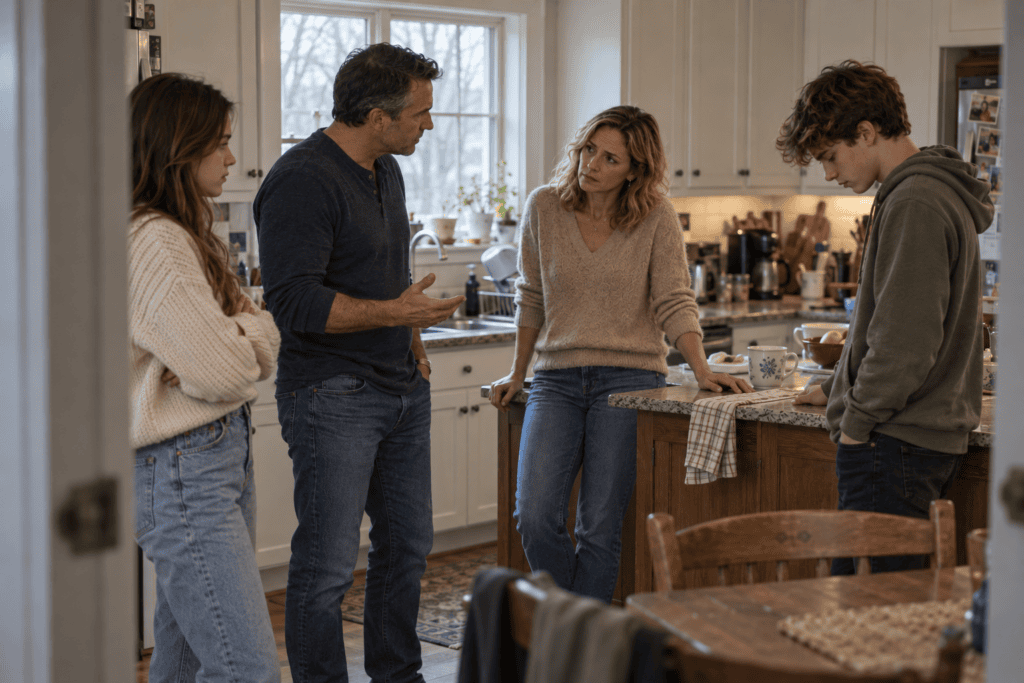
Every family goes through difficult seasons. Disagreements, stress, changes, and misunderstandings are normal parts of family life. But sometimes the same challenges keep coming up, conversations get harder, or family members start feeling increasingly disconnected from one another. Family counseling doesn’t mean something is “wrong” with your family. It can simply provide a supportive space to better understand what is happening beneath the surface and learn healthier ways to move forward together.
The following are some signs that your family may benefit from professional counseling support:
The same conflicts keep happening without resolution.
Maybe your family argues about the same issues repeatedly. The topic may change, but the pattern feels familiar, or someone becomes defensive, another person shuts down, voices get louder, and eventually everyone walks away frustrated.
Communication has become difficult or emotionally charged.
Healthy communication can become challenging when family members feel hurt, misunderstood, or unheard. You might notice more yelling, blaming, interrupting, avoidance, or shutting down.
Example: You may find yourself thinking, “I don’t even know how to bring this up anymore because every conversation turns into an argument.” Therapy can provide a more structured environment where each family member has the opportunity to express themselves and practice listening to one another differently.
Family members are becoming emotionally distant.
Conflict is not always loud. Sometimes one of the biggest signs of family distress is silence. Family members may stop sharing how they feel, spend less time together, or begin avoiding meaningful conversations.
Ongoing tension between parents and children.
As children grow, family relationships naturally change. Adolescence and young adulthood can especially bring new conversations about independence, boundaries, expectations, responsibilities, and trust.
Past hurts continue to affect present relationships.
Families sometimes move forward from difficult experiences without fully processing them. Even when nobody talks about what happened, unresolved hurt can show up through resentment, defensiveness, withdrawal, or difficulty trusting one another.
One person’s struggles are affecting the entire family.
When one family member is experiencing emotional, behavioral, relational, or substance-related challenges, the effects can extend throughout the family. Other family members may become worried, frustrated, overly responsible, or unsure of how to help.
Family counseling can shift the focus from “Who is the problem?” to questions such as, “How is our family being affected?” and “How can we respond to one another in healthier and more supportive ways?”
Boundaries and roles within the family have become unclear.
Families can experience stress when one person feels responsible for keeping everyone happy, children become involved in adult conflicts, or relatives struggle to respect each other’s boundaries.
You Don’t Have to Wait for a Crisis
Family counseling is not only for families who are at a breaking point. It can also help when you notice that something feels different, communication is becoming more difficult, or your family could use additional support navigating a challenging season.
Sometimes the first sign that counseling could help is simply realizing: “We care about each other, but what we’re doing right now isn’t working.” Family conflict therapy helps members within the unit express their concerns and increase the ability to hear each other.
At Avedian Counseling Center, we understand that every family has its own history, relationships, strengths, and challenges. We provide family counseling services and a supportive and nonjudgmental environment where families can explore concerns together and work toward healthier ways of relating to one another.
Raha Shahbazian is a family therapist in Los Angeles, offering counseling in Sherman Oaks and Woodland Hills at the Avedian Counseling Center.

Raha Shahbazian is dedicated to supporting individuals and couples as they navigate emotional challenges, relationship dynamics, and life transitions. Raha’s clinical approach is primarily psychodynamic, focusing on how past experiences and relational patterns influence present-day thoughts, emotions, and relationships. She strives to create a safe, reflective, and collaborative therapeutic space where clients can gain insight, foster emotional growth, and develop more fulfilling connections with themselves and others. Whether clients are feeling overwhelmed by a recent life transition, working through the impact of past trauma, or noticing changes in a child’s behavior, Raha provides support to those unsure of where to begin.
Raha provides multilingual individual and couples counseling in Farsi, offering therapy in Sherman Oaks and Woodland Hills.